Basketball rules for beginners make more sense when you start with three questions: who has the ball, which basket are they attacking, and why has play stopped?

Start with the game you are actually watching
A professional broadcast, a junior club game and a beginner skills session may use different competition arrangements. Ask the organiser about the rules for your age group instead of copying everything you see in an NBA clip. Keep those local instructions with the fixture so the family can refer to the same information.
Under standard FIBA five-a-side rules, each team has five players on court, and the game has four ten-minute quarters. A free throw is worth one point; ordinary field goals are worth two or three depending on where the shot is released. Junior timing and competition modifications must be confirmed locally.
Follow possession before following every rule
Pick one team and watch what changes when it gains or loses the ball. Notice how players spread out, where passes go and how the other team responds. This gives a new spectator a way into the game without needing to memorise every signal on the first afternoon.
When the whistle sounds, pause and watch the referee’s signal and where the next play starts. You can write down an unfamiliar term and ask a coach afterwards. Calling out a different interpretation from the sideline usually makes the moment harder for a beginner to understand.
Three useful questions for the coach
Ask: “Which rules are adapted for this age group?”, “What should families know about the clock and substitutions?” and “Where can I read the competition rules?” These questions are more useful than assuming that every tournament, social league and development programme uses identical conditions.
If your child is confused by a call, ask them which part they noticed. Then use the coach’s explanation to connect the rule with the movement. One clear example is easier to remember than several unrelated definitions delivered immediately after a game.
Use a simple first-game viewing plan
For the first quarter, follow the direction of attack. In the next part of the game, watch how a team gets the ball to another player. Later, notice what happens after a missed shot. These are suggested viewing prompts, not a required order or a test of basketball knowledge.
Keep the conversation light. Ask “What did you notice?” and let your child point out something you missed. You can learn the terminology together while still enjoying the score, the atmosphere and the team’s effort.
Learn the next piece when you need it
For ball-handling calls, read travelling and double dribble explained. For team roles, use basketball positions explained. These guides focus on different questions so you do not have to absorb everything at once.
Before the first session, check the first-season checklist and the club’s own instructions. Our Queensland directory is a starting point for finding a provider; listings do not replace your enquiries or guarantee availability.
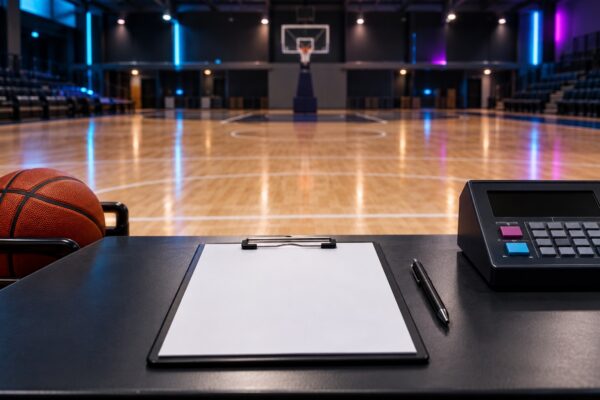
Helping at the table as well as watching the game? Our first scorebench duty guide covers your assigned role, local timing instructions and the questions to ask an experienced scorer.
Sources and editorial approach
References checked 12 October 2026: FIBA Official Basketball Rules 2026, effective from 1 October 2026. This is Kid on Court editorial guidance, not a claim that Luca has tested this activity, product or experience. Read our editorial policy.