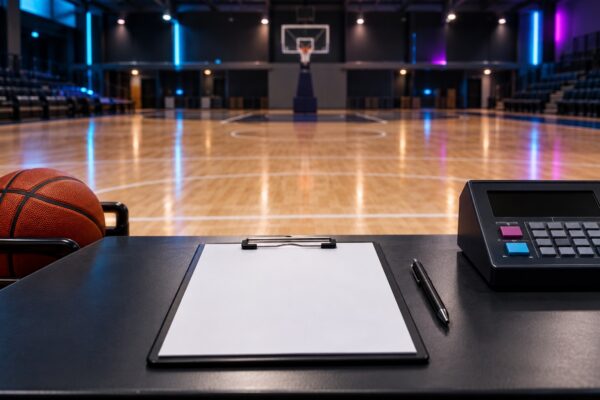
If your name has come up on the scoring roster for the first time, there can be a lot to take in. The players are warming up, there are buttons in front of you and the game is about to start. Before pressing anything, let the other people at the table know you are new.
You do not have to work it all out on your own. A short practice with someone who knows your competition’s equipment is a good place to start. This guide covers the questions to ask and the things to check, but your association’s training and local competition rules come first.
What does the scorebench do?
The scorebench, also called the scoretable, helps the referees keep the game running. The jobs can include recording points, fouls and timeouts, running the game clock and using a shot clock if the competition has one. Basketball Queensland explains the roles and training pathway.
At a local game, one person might do more than one job. The scoring tablet and scoreboard might also be operated by different people. Each stadium can have a different setup, and not every junior competition uses a shot clock.
Start with three questions: “Which job am I doing, who is helping me and which rules sheet are we using?” It is much easier to learn when you know what you are responsible for.
Before your first game on the roster
- Ask someone to show you before game day. Your team manager can help you find the association’s beginner course or an experienced scorer. Ask if you can watch a game from the table first.
- Check when to arrive. Give yourself time for the local pre-game checks. Follow the arrival time your organiser gives you rather than turning up at tip-off.
- Check what to bring. You might need a pen for a paper scoresheet, or the venue might supply everything. Do not assume you have to buy a tablet or download a paid app.
- Let the manager know early if you cannot make it. Follow your team’s process for finding a replacement. That gives everyone time to sort it out before the game.
If you would like to keep learning beyond a turn on the team roster, Basketball Australia’s getting-started pathway begins with your local association and includes learning and practical experience. Ask which training you need for your role, as the requirements and costs can vary.
Five things to check at the table
1. Have you got the right game?
Check the competition, age group, court and fixture. Make sure the home and away teams are correct on both the scoring system and the scoreboard. Check the team names rather than relying on jersey colours.
2. Are the player numbers right?
Ask the authorised team representative to check the roster and jersey numbers using your competition’s process. If a player is missing from the system or has a different number, get the right official to help. Deciding whether a player is eligible is not the scorer’s job.
3. Do you know your controls?
Ask someone to show you the buttons you will use, how to tell an entry has worked and what to do if you make a mistake. Only practise in a training mode approved by the organiser or with someone supervising. Do not try out unfamiliar buttons in a live game.
4. What are the local timing rules?
Check when the clock runs and stops, how breaks work and whether the timing changes near the end of a game. Ask who handles timeouts, substitutions and any possession arrow too. Junior competitions can have different rules, so do not copy what you have seen in the NBA or at another competition.
5. Who can help?
Find out who the experienced scorer and court supervisor are. Ask how the table should get a referee’s attention and what needs to happen before an entry can be corrected. Knowing this before tip-off makes it easier to ask for help during play.
If your venue uses BasketballConnect
Basketball Queensland’s BasketballConnect scoring manual covers attendance, scoring, fouls, action logs and confirming the game. It also explains that your account needs to be set up for scoring. Being able to view fixtures does not automatically give you scoring access.
Ask the organiser to arrange the approved access and give you the current instructions. Follow the venue’s authorised login process, keep login details private and ask for help if access is not working. Do not create a second game to get around the problem.
When checked, the manual was marked as last updated in April 2023. Use it with your current local training, as the screens may have changed since then.
Keep talking to the other scorers
Before the game, agree on how you will call out and confirm information. For example, saying the team, player number and points clearly can help everyone check that the right entry has been made. Your trainer can show you the method your venue uses.
Watch the referees’ signals, listen to the other people at the table and focus on your own job. If you are a parent, leave the family photos to someone else while you are scoring. The table needs to stay neutral, even when your child is playing.
If you miss a number or think something on the display is wrong, say so straight away and follow the agreed correction process. Do not guess, quietly change an earlier entry or argue with a referee’s decision from the table. It is better to explain what you missed and ask for help.
Check before you leave
There are still a few things to do after the final siren. Ask the experienced scorer what needs to be checked and approved before closing the game. The final display, recorded result and any official sign-off need to follow your competition’s process. Do not press finalise or submit until someone has shown you when to do it.
Once everything is finished, ask, “What should I practise before next time?” Make a note of the answer, but do not take photos of player records or share account details.
Your first-game checklist
- I know my job and who will help me.
- I have the current local timing and scoring instructions.
- The fixture, home and away teams, and player numbers have been checked.
- I have been shown the equipment and how to correct a mistake.
- I know how to get an official’s attention.
- I know who approves the final result before the game is closed.
If you want to understand more of what is happening on court, have a look at our basketball rules guide. Our box-score guide explains common statistics too. Just remember that collecting detailed player stats is a different job from recording the official game.
Start by asking your club about beginner scorebench training where someone can help you learn. If you are still finding a club, you can find a basketball association or program here.