Basketball gear storage works best when it follows the routine: where the bag lands, where used gear goes, and where clean essentials wait for the next session. Start with those jobs before choosing a shelf.

Map the path from the door to the next game
For one week, notice where the bag, shoes, bottle and ball actually end up. Write down the places where the routine gets stuck: a bottle stays in the bag, socks disappear into a room, or the ball blocks a walkway. This is a suggested observation exercise, not a claim about every household.
Choose one accessible home for the essentials and a separate route for laundry. A small arrangement people use is more valuable than a large matching setup that adds extra steps. Ask the player which location they can realistically keep using.
Give each item a job and a place
Use existing storage first. A bag hook, open cubby or suitable floor space may solve the immediate problem without a shopping list. Check the capacity and attachment requirements for anything that carries weight; follow product instructions rather than improvising mounts.
Keep only the current session essentials in the ready area. Put occasional extras somewhere else. If several children share the space, separate their items in a way they can recognise without needing an adult to sort everything each time.
Make a small-space planning sheet
Draw three simple boxes labelled ready, used and occasional. Under ready, list the clean items that leave the house. Under used, list what must be emptied, cleaned or cared for after a session. Under occasional, list things needed only for a specific event.
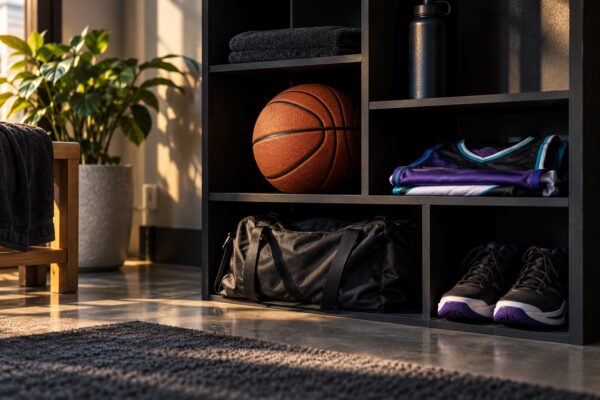
Then write the real measurements beside the storage location. Measure the bag when packed and include the space needed to reach and lift it. These are your household measurements; the concept image in this article is not a tested layout or a dimensioned installation plan.
Build the reset into the return home
Choose a short repeatable sequence: empty the bag, deal with used clothing, care for footwear according to its instructions, and return equipment to its place. Give the player an age-appropriate part of that routine. Keep the steps visible until they become familiar.
Use the ball manufacturer’s care and storage instructions, and do not leave damp gear packed simply because the cupboard looks neat. A tidy photograph is not the same as a routine that keeps equipment ready for another session.
Buy only for the gap you have found
Once the routine is clear, list the one storage problem that remains. It might be access, separation or a place for the ball. Compare products against that problem and your measured space. Avoid adding several accessories because they appear together in an inspiration image.
Use our bag checklist to define the essentials and the bedroom guide for broader room planning. Our Shop contains retailer links with its own disclosure; check dimensions, mounting details and current seller conditions before buying.
Sources and editorial approach
References checked 12 October 2026: Spalding’s equipment care guidance; the ready/used/occasional worksheet is an original editorial planning tool. This is Kid on Court editorial guidance, not a claim that Luca has tested this activity, product or experience. Read our editorial policy.