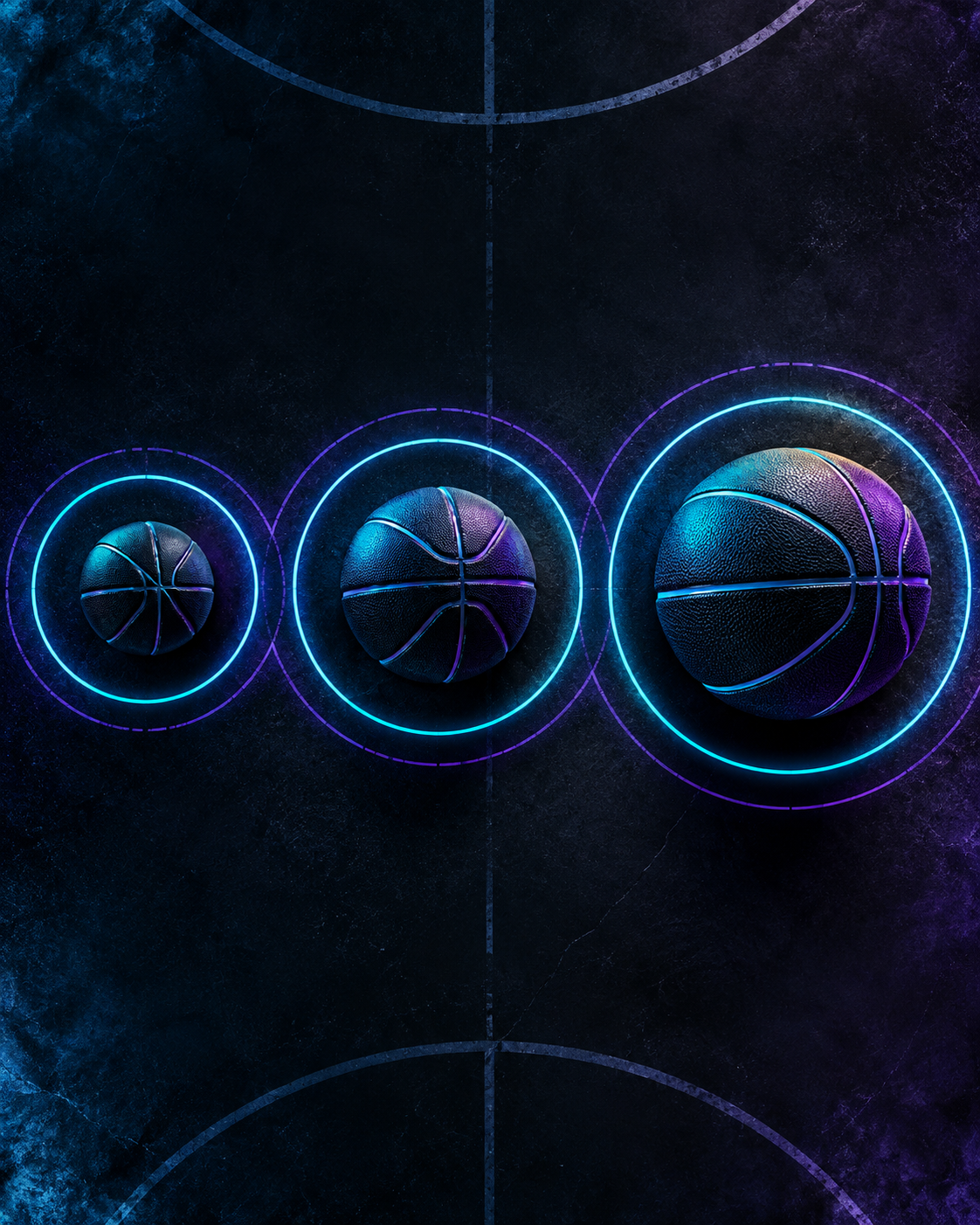
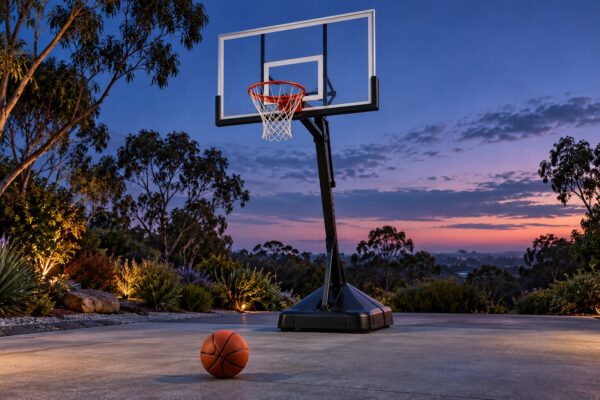
The court matters as much as the ball. Before buying a basketball for a young player, work out where it will spend most of its time: the driveway, a park court or an indoor sports centre. A beautiful indoor ball is not a sensible purchase if it will mostly bounce on rough concrete.
This guide helps you choose a type of ball. It is researched buying advice, not a ranking based on product testing.
Which type fits your week?
- Driveway and park sessions: start with a basketball labelled for outdoor use.
- Indoor training only: compare indoor balls in the size your club uses.
- A mix of both: an explicitly labelled indoor/outdoor ball is the practical starting point.
Understand the surface label
Spalding separates basketballs into indoor, indoor/outdoor and outdoor ranges. Its care guide describes indoor balls as having leather or higher-end composite covers, while outdoor balls use more durable covers for rougher courts. Rubber is a common outdoor option. Composite covers vary, so the word “composite” alone does not tell you where a particular ball belongs.
Read the exact model description rather than judging by colour, a league logo or how expensive it looks. If a listing says indoor only, treat that as a meaningful limit.
Our buying priorities
First: the correct size. Ask the club or programme which ball your child should bring. Competition and programme requirements can differ, and buying a larger ball is not a shortcut to making a child a better player. Our Australian basketball-size guide is a useful starting point, with the local programme having the final say.
Second: the right surface. An affordable outdoor ball that gets used is a better match for driveway practice than an indoor-only purchase you are worried about damaging. If the family needs one ball for everything, compare all-surface options first.
Third: a feel the player likes. Where possible, let them hold the ball and compare the texture. Check that the size on the packaging matches the ball you are handling. A favourite colour can be a good tie-breaker once the practical questions are settled.
One ball or two?
Start with the minimum that supports the player’s routine. There is no need to buy a collection before the first session. Ask whether balls are provided at training, whether players bring their own and whether the programme includes a starter pack.
A second ball may make sense later if a player has regular indoor sessions and spends plenty of time outside. Keeping each ball for its intended surface is simpler than buying a premium ball and expecting it to suit every job. Label personal gear so it is easier to distinguish at a busy session.
Budget for the whole purchase
Compare the delivered Australian price, not only the sticker price. Check whether you already own a compatible pump and needle, and whether the ball arrives inflated. If it is a present, confirm the size and surface with a parent or coach before ordering. A receipt is useful if someone else has already bought the same thing.
A league-branded design can be part of the fun, but do not let the logo replace the size and surface checks. Read the product description even when the packaging looks familiar.
Keep the ball ready to use
Follow the pressure marking and care instructions supplied with your particular ball; there is no single inflation number to apply to every basketball. Spalding advises against exceeding the marked pressure and recommends keeping balls out of prolonged direct sun or rain. Follow its needle and inflation instructions if using a Spalding ball.
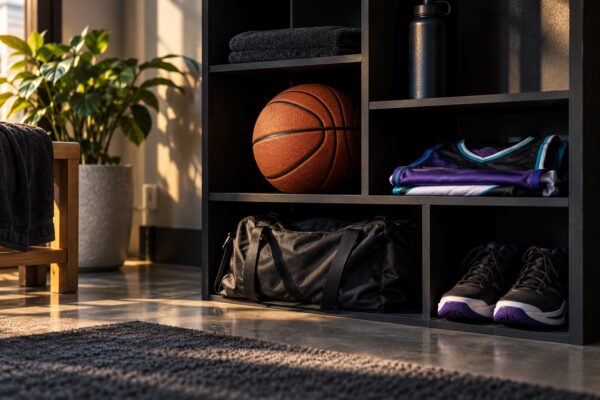
Create an easy storage spot near the sports bag. After each session, bring the ball inside, check its condition and put it where it will be found before the next game. A simple routine is more useful than an elaborate storage system nobody uses.
Common questions
Can an indoor ball be used outside just once?
It is better to follow its stated surface use. If outdoor play is part of the plan, choose a ball intended for it rather than relying on occasional exceptions.
Should I buy the ball used in professional games?
Only if its size, surface requirements and price suit your player. A professional association does not make it the right choice for every junior.
Next: pack your basketball bag or explore Queensland courts and programmes.
Source
Spalding Australia’s maintenance and care guide, consulted 10 October 2026. Material and care information comes from the manufacturer; the purchasing priorities are Kid on Court editorial guidance. See our editorial policy.
Once you have chosen a ball, our basketball care guide covers cleaning, pressure and storage using the instructions for your exact model.