If your basketball feels flat, you do not always need to buy a new one. Start by checking its pressure instructions, the valve and whether you are using it on the right surface.
Looking after your ball does not need to be complicated or involve lots of cleaning products. A few simple habits can help keep it ready for training, games and a shootaround with friends. The main thing is to follow the instructions for your own ball, because they are not all made the same way.
Get to know your ball
Look for the model name, the surfaces it is made for and the inflation instructions on the ball or its packaging. Take a photo while the writing is easy to read. Keep the receipt and product details as well, especially if you have spent more on an indoor ball.
A composite cover does not automatically mean a ball is suitable for every court. Check the exact model. Our indoor versus outdoor basketball guide can help when choosing a ball, but follow the manufacturer’s instructions for the one you already have.
Give it a gentle clean
A ball can pick up plenty of dirt during an outdoor session. For its basketballs, Spalding’s care guide recommends a damp cloth, with mild soap and warm water if needed. It says to avoid soaking the ball or drying it with heat. Check your own model’s instructions before using a cleaner.
Wilson’s official basketball-maintenance FAQ, published in Japanese, recommends a soft cloth, wiping away moisture and letting a wet ball dry somewhere ventilated. It also warns against hairdryers and solvents.
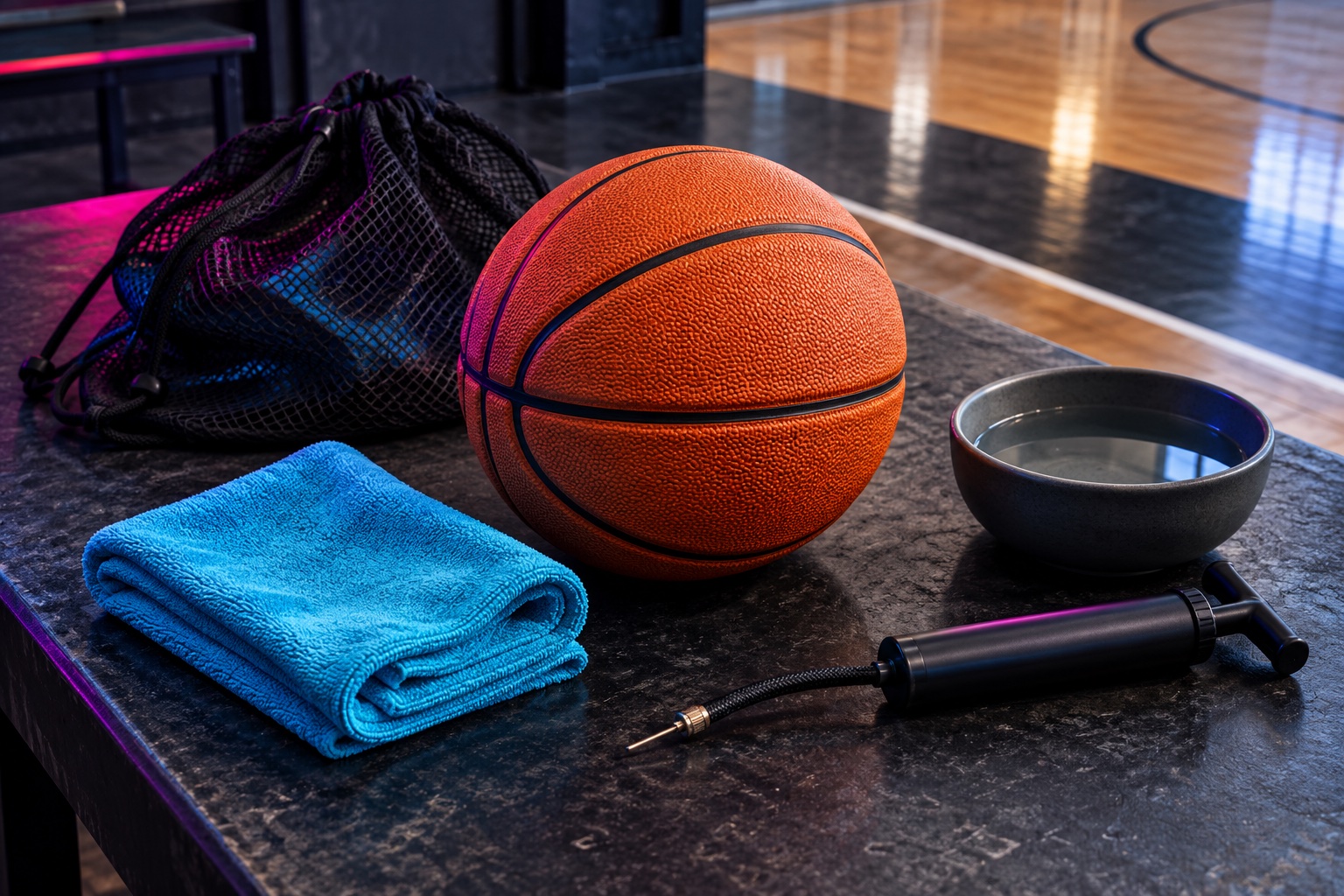
Keep a clean cloth near where you store your ball so it is easy to wipe off dirt before putting it back with the rest of your gear. If the ball is wet, let it dry as its care instructions explain rather than closing it inside your bag.
You do not need to scrub hard or try strong products just because there is a scuff. If a mark will not come off with normal care, ask the manufacturer what is safe for that cover. Household stain removers, shoe cleaners and leather conditioners are not automatically suitable for a basketball.
Check the pressure on your own ball
There is no single pressure to use for every basketball. Spalding’s inflation guidance says to check the information around the valve and not go above it. Read the unit as well as the number, because psi and kPa are different pressure units.
Use a gauge to check the pressure against those instructions. Squeezing the ball or giving it a bounce might help you notice that it feels different, but neither tells you the actual pressure.
If the writing has worn away, look up the exact model or ask the manufacturer before pumping it up. Do not just copy the pressure from another ball in the team bag, especially if it is a different size or type.
Check the pump and needle
Read the pump instructions and the ball maker’s advice about looking after the valve. The advice can differ: Spalding’s care article mentions a suitable needle lubricant, while Wilson’s FAQ describes moistening the needle and putting it in straight. Follow the advice for your own equipment rather than mixing instructions from different products.
Have a look at the needle each time you use it. If it is bent or damaged, replace it with the correct type. Do not try to force it into the valve. A small closed container is a handy place for spare needles, rather than leaving them loose at the bottom of your sports bag.
Spalding recommends adding air slowly and following the pressure printed on the ball. Get your instructions and gauge ready first. If you cannot find the right pressure or the needle will not go into the valve easily, stop and ask the manufacturer or retailer for help.
Keep it somewhere easy to find
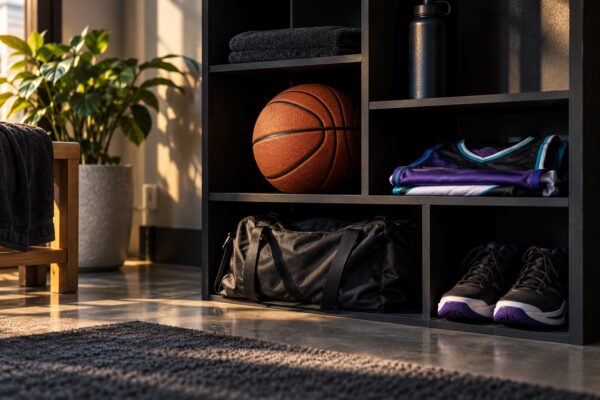
Spalding recommends storing basketballs indoors at room temperature, away from heaters and long periods in the sun. Having a regular spot for your ball also makes it easier to notice if it did not come home from training.
A basket or shelf can work well, as long as the ball can dry and is easy to grab. Keep your pump, gauge and protected spare needle nearby. If you have an indoor ball and an outdoor ball, keep them where you can tell them apart without checking every label when you are rushing out for school.
Our basketball gear storage guide has more ideas for a small space. You do not need to buy a whole new storage system to get your gear organised.
What if it keeps going flat?
Needing a bit more air occasionally is different from a ball that keeps going flat. If it keeps happening, note the model, the pressure you used and how quickly it changed. Then ask the retailer or manufacturer what to do next.
Do not add extra pressure to try to make it last until training. The details you have written down will be more useful when asking for help. Avoid making your own valve repairs or injecting sealants unless the manufacturer specifically recommends that method for your model.
If you have a backup ball, use it while you sort out the problem. Check the warranty process before trying a repair too.
A quick care checklist
- Before playing: make sure you have the right ball for the surface, look for damage and check the pressure against its own instructions.
- After playing: clean off dirt using the recommended method and let the ball dry properly if it is wet.
- When putting it away: return the ball and pump kit to their usual spot, away from prolonged heat and weather.
- If something changes: get help with a damaged valve, an unusual shape or repeated air loss rather than adding more pressure to hide the problem.
If it is time for a replacement, start with the correct basketball size. Then check the surfaces each ball is made for in our research-based basketball shortlist. Knowing where you will play and how to look after the ball helps you choose one that suits you.
Need a pump or gauge? Compare the published features and Australian price snapshots in our four-pump comparison, then check the exact model before buying.